


Environmental Voter Project Statement on the murder of Daunte Wright
The entire Environmental Voter Project family is deeply saddened and outraged by the horrific police killing of Daunte Wright in Minnesota.
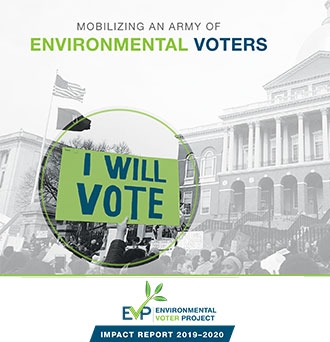
Two Special Briefings on EVP's 2020 Results and Plans for 2021
We're thrilled to share our 2019 - 2020 Impact Report with you - and we're even more excited to invite you to two special briefings on the Environmental Voter Project's 2020 results & plans for 2021 (plus Q&A).

HuffPost: The ‘Army Of Environmental Super Voters’ Is Growing, And Marching On City Hall
Nathaniel Stinnett launched the Environmental Voter Project in 2015 to resolve a simple but enormously important contradiction. Polls found a vast majority of Americans understood climate change and wanted the government to act. And while millions of those people were registered to vote, many never cast ballots.
Our Daily Planet: Environmental Voter Project extends to 5 new states to mobiliize millions
The Environmental Voter Project (EVP) has announced that it will be expanding its voter outreach programs into five new states: Alaska, Texas, Kansas, Iowa, and New York. With this addition, the EVP will now operate in 17 states to identify inactive environmentalists and equip them with the tools to become lifelong voters.

"It's important and it's necessary": The Story of an EVP Volunteer
Historic. Challenging. Chaotic. Surreal: Those are just some of the many words that can be used to describe 2020. In a year that required adaptability and patience for almost every aspect of life, one thing that stood out was that over 158,000,000 Americans voted in the 2020 presidential election.

Citizen's Climate Lobby: Environmental Voter Project helped put climate near top of national agenda
At Citizens’ Climate Lobby, we often say the solution to climate change is democracy. Well, the first step to engage with our democracy is voting. Research shows, however, that many who are concerned about the state of our climate don’t even take that initial step. In fact, tens of millions of people who identify as environmentalists have been no-shows at the polls on election day.
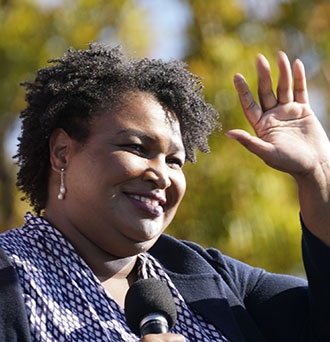
Living on Earth: Georgia's green voters helped deliver the Senate to the Democrats
Voters most likely to rank the environment as their top priority are young, Black or Latino, and they were key voters in the two recent senatorial wins in Georgia that gave the majority to Democrats.
Voting is a habit, not a series of one-off transactions. And at the Environmental Voter Project, we leverage the latest behavioral science to work year-round in local, state, and federal elections to turn non-voting environmentalists into consistent super-voters. To us, every election is an important behavioral intervention opportunity.
Mother Earth Podcast: Nathaniel Stinnett on how to make our leaders protect the environment
In this second of two special bonus episodes to Season One of the Mother Earth Podcast, we sit down for a timely conversation with Nathaniel Stinnett, founder and executive director of the Environmental Voter Project.
New Green Strategy: Change The Electorate, Not The Election
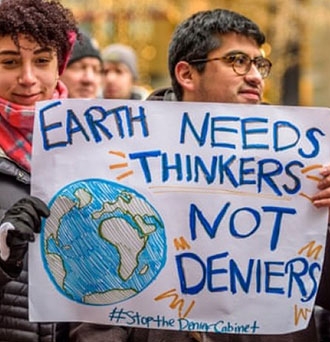
The Guardian: 'We Need Some Fire': Climate Change Activists Issue Call To Arms for Voters
Climate Connections: Mobilizing an Army of Environmental Voters
Think Progress: A 'Jaw-Dropping' 15 Million Super-Environmentalists Don't Vote In The Midterms
CBS News: Non-profit seeks to propel registered environmentalists to the polls

The New York Times: Visionaries: Taking On Climate Change
Huffington Post: This Year, Earth Day Is On Nov. 6

Yes! Magazine: 13 Climate Justice Leaders Imagined as Comic Superheroes
The Earth could use some climate-change-fighting superheroes right about now. And according to a new comic series by the nonprofit Amplifier, there are a few real-life ones in our midst. Thirteen of them, actually.